 By
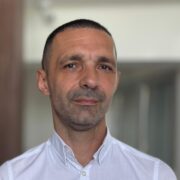
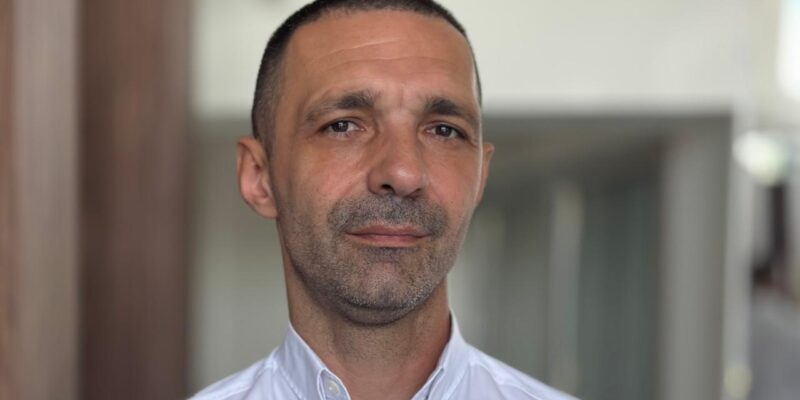
Podgorica-based photojournalist Boris Pejović recently drew public attention when he made threats against Montenegro’s top state officials and all members of Parliament, calling them “Ustashas* and traitors” and telling them: “We should have killed you, we could have killed you, you should have lost your lives.” Pejović’s actions were an expression of outrage over the paltry fine imposed by the Misdemeanour Court in Bijelo Polje on a person who had directed those very same words at him and his fellow journalist Balša Rudović in August last year, when they were attacked by a group of people in Berane during the installation of a monument to Chetnik war criminal Pavle Đurišić. Pejović also reported himself to the police, but the prosecution decided not to bring charges against him.
“I think the most important thing is to understand why I did it. I didn’t report myself to the police because I genuinely wanted to threaten anyone, but because I wanted to highlight the absurd situation we find ourselves in. I had no intention of becoming a criminal. I wanted to draw the attention of the country’s leaders, decision-makers and those responsible for implementing those decisions to the absurd legal provisions they had drafted and adopted, or to the fact that they had done nothing to change them. It is precisely such failures that contribute to the increasing number of attacks on journalists, photojournalists and other media workers,” Pejović told SafeJournalists.net.
He said he wanted to draw their attention to the issue in a provocative way, “so that, even for a minute, they could experience what it’s like to be in our position and imagine how they would feel in our shoes.”
“I wanted to awaken their empathy, to put them, even briefly, in the position we have been in for years. Whether I succeeded, and whether they are even capable of feeling empathy once they take office, remains to be seen. I also wanted to draw the attention of public officials and the wider public to the problem of sentencing policy, which any reasonable citizen would find troubling. It cannot be normal or fair for the fine for failing to carry a driving licence to range from €500 to €2,000, while the fine for making death threats ranges from €250 to €1,500,” he explained.
Pejović said that, after he reported himself to the police, the prosecution decided that he would face neither criminal charges nor misdemeanour proceedings.
“I see this as confirmation that they understood it was an act of protest rather than a genuine intention to endanger anyone’s safety. Nevertheless, there was a real risk that they might not interpret it that way, as I have been arrested in the past simply for doing my job,” he said.
Recalling the events in Gornje Zaostro on 8 August 2025, Pejović stressed that what he and two other colleagues experienced was far more than an unpleasant incident while reporting. Several dozen people attacked them, threatened them, seized their equipment and attempted to prevent them from covering an event of exceptional public interest.
“Our colleague Stevo Vasiljević was physically attacked. Fortunately, he was not injured, but his equipment was damaged. Balša and I received serious threats. All of this happened in full view of plainclothes police officers, who failed to intervene,” Pejović said.
The outcomes of the proceedings illustrate how difficult it is to obtain justice in such cases. Pejović said that Nikola Raičević and Milić Ralević were each sentenced at first instance to six months’ imprisonment, to be served under house arrest, for using coercion against him. In separate proceedings against Danko Femić, a first-instance acquittal was handed down. In two misdemeanour proceedings, four individuals were acquitted and three were found liable at first instance. According to Pejović, three of those acquitted should never have been prosecuted in the first place, as the threats and actions attributed to them were unknown to him and his colleagues as victims, raising questions about how they came to be included in the charges.
“The Basic Court imposed an educational measure of increased parental supervision on two minors, for a minimum of one month and a maximum of six months, for insolent and offensive behaviour towards me. In another misdemeanour case, however, the court found that Filip Cikić had threatened both me and my colleague Balša Rudović and fined him €300, with the possibility of the fine being considered paid if he pays half the amount within the prescribed deadline. Proceedings against another defendant were discontinued because the wrong person had been charged in connection with the attack on our colleague Stevo Vasiljević,” Pejović explained.
He stressed that it was precisely the judgment ordering Cikić to pay €300, or €150 if paid within a short period, that triggered his insulting remarks directed at Montenegro’s leaders and his decision to report himself to the police.
“So it would not be accurate to say that no one has been held accountable. Two men were convicted at first instance for using coercion against me, and Filip Cikić was fined for threatening Balša and me. Two minors were also found responsible for insolent behaviour. But that is not the same as fully investigating an attack involving several dozen people. We still have not received a response commensurate with the seriousness of what happened, one that would demonstrate that everyone who participated in the violence has been held accountable.
“That is why I believe the fundamental problem goes far beyond my decision to report myself and a single fine. We cannot allow an attack on journalists to ultimately be reduced to a handful of individual misdemeanours and symbolic penalties. When journalists receive death threats simply for taking photographs and reporting, the state must demonstrate that such behaviour carries serious consequences. Otherwise, it sends the message that intimidating journalists is an acceptable risk,” Pejović said.
Speaking about the shortcomings of the investigations conducted in this case, Pejović said there had been numerous failures. He highlighted the example of a defence witness who was a police officer whom they had reported for failing to act and against whom disciplinary proceedings had been conducted in connection with the gathering in Berane.
“His testimony is not questioned, nor is the matter discussed during the trial or those circumstances taken into account when the judgment is delivered. According to their own statements, none of the defendants or witnesses came to attend the unveiling of a monument to Pavle Đurišić, a notorious collaborator of the occupying forces, but rather to attend a church patron saint’s celebration, to eat and drink. Some even admitted they were drunk. To top it all off, three defendants who are in the same legal position are being tried in two separate criminal proceedings, resulting in two contradictory first-instance judgments arising from the same circumstances and concerning the same criminal offence,” Pejović explained.
Similar situations have occurred in two misdemeanour proceedings concerning the same matter. The reason, according to Pejović, is that the wrong individuals were prosecuted, even though he and his colleagues had clearly identified those responsible before charges were brought and before the cases were submitted to the court. At the same time, other defendants appeared in the proceedings whom they had identified only as participants in the gathering, while some had not even been noticed by the journalists.
“How they ended up among the defendants is something only those who drafted the charges can explain,” Pejović concluded.
Interview by: Marijana Camović Veličković
___
*The Ustashas (Ustaše) were members of a Croatian fascist and ultranationalist movement that ruled the Independent State of Croatia, a Nazi puppet state, during World War II. The regime was responsible for the systematic persecution and mass murder of Serbs, Jews, Roma and political opponents. Today, the term Ustasha is also used as a highly derogatory political insult in the former Yugoslavia, often to label someone a fascist, extremist or traitor.