 By
By Montenegro continues to record a decline in the Journalists’ Safety Index, which measures the situation in 2025, while in 2026 the Trade Union of Media of Montenegro (TUMM) has so far documented 13 cases of attacks and pressure targeting media professionals.
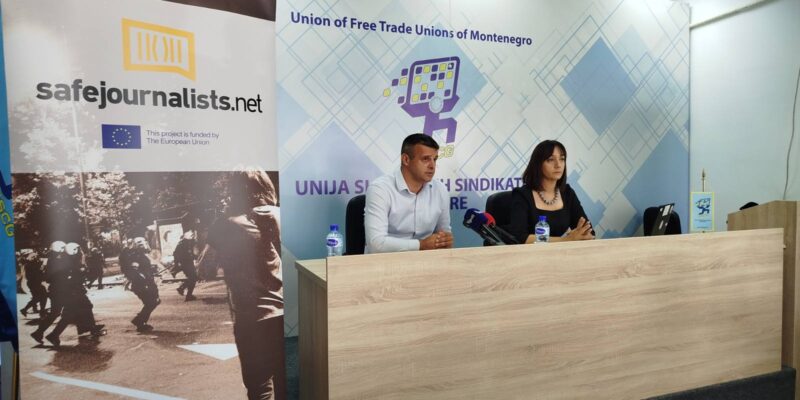
The findings were presented during the launch of the research report “Media Freedom Indicators and the Journalists’ Safety Index 2025,” which TUMM has been conducting for the tenth consecutive year.
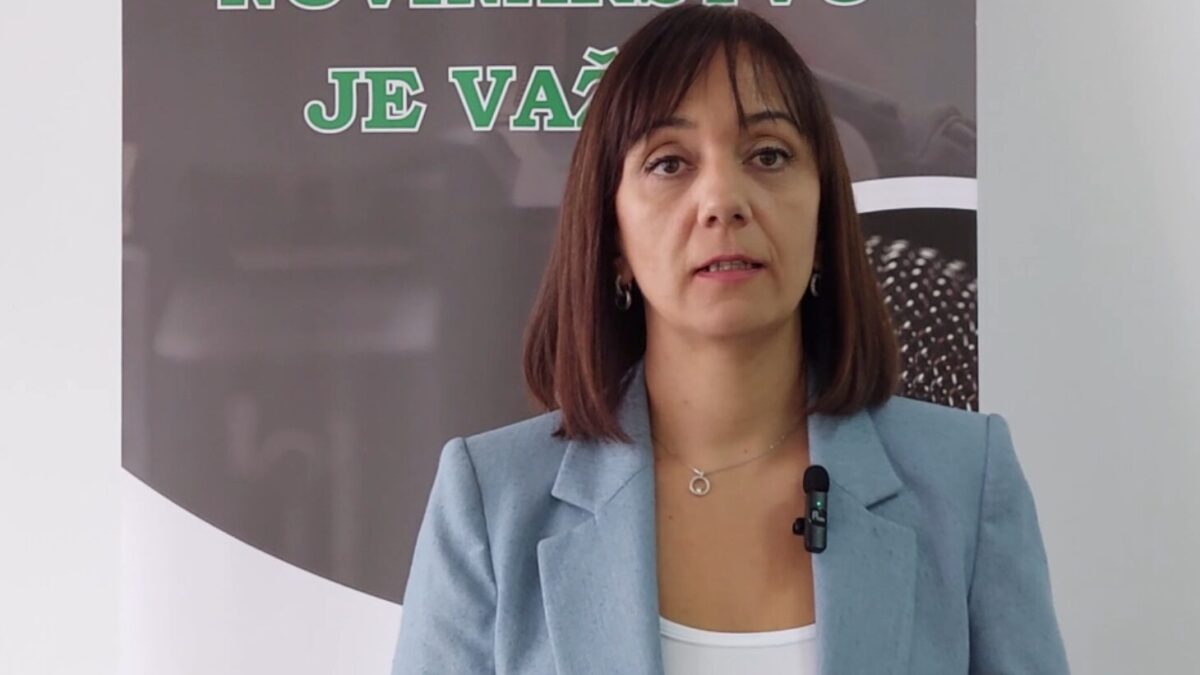
TUMM Vice President and the report’s author, Marijana Camović Veličković, 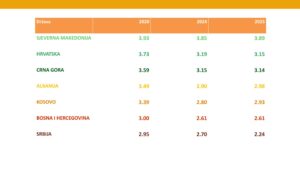 said that Montenegro retained third place in the region, with a score of 3.14 on a scale from 1 to 7. It was ranked behind North Macedonia (3.89) and Croatia (3.15), while Albania (2.98), Kosovo (2.93), Bosnia and Herzegovina (2.61), and Serbia (2.24) scored lower.
Since the SafeJournalists Network introduced the Journalists’ Safety Index as a tool for measuring the safety of media workers across the region, Montenegro has experienced a steady, albeit gradual, decline. The country scored 3.59 in 2020, 3.40 in 2021, 3.35 in 2022, 3.33 in 2023, and 3.15 in 2024.
“The main factors contributing to the lower score for 2025 were the number of attacks on journalists, the failure to implement media legislation, poor working conditions, low salaries in the media sector, and weak or non-existent social dialogue at all levels,” Camović Veličković said.
Forty Percent More Attacks in 2025 Than the Previous Year
She explained that TUMM monitors attacks against media workers on a daily basis and has so far recorded 13 cases in 2026: three SLAPP lawsuits filed by Prva Banka, three threats to life and physical safety, and seven incidents classified as “other threats.”
“During 2025, the TUMM database on the SafeJournalists website (www.safejournalists.net) registered 33 attacks and threats against journalists and media outlets, representing a 40 percent increase compared with the previous year,” Camović Veličković said.
She noted that the most serious incident in 2025 was the physical attack on photojournalists Boris Pejović and Stevo Vasiljević, which occurred in the village of Gornje Zaostro near Berane during the installation of a monument to Pavle Đurišić, a World War II Chetnik commander and convicted war criminal.
She also recalled that two women journalists have been under continuous police protection for the past five years after previously being subjected to serious attacks and threats related to their investigations into high-level corruption and organized crime.
“During 2025, a third female journalist was granted the same level of protection. However, that protection was withdrawn this year despite the fact that the circumstances that justified it had not changed,” Camović Veličković explained, adding that the police handled six requests for individual security risk assessments for journalists over the course of the year.
She pointed out that specialized support services for media workers exposed to attacks and threats are provided primarily by civil society organizations, even though journalists themselves identify such assistance as one of their greatest needs.
“The Trade Union of Media also provides free legal and psychological assistance. During 2025 alone, more than 160 individual therapy sessions were delivered, along with dozens of cases involving free legal support at various levels,” she said.
According to Camović Veličković, there has been no meaningful improvement in the attitude of political parties or public officials toward the media, while the practice of criticizing media outlets or individual journalists because of their editorial policies continues unabated.
“The most serious attack on photojournalists passed without condemnation from the far-right political parties, including the one to which the Speaker of the Parliament of Montenegro belongs,” she added.
According to her, the number of online attacks against media workers increased significantly, rising from nine cases in 2024 to sixteen in 2025, seven of which involved threats to life and physical safety. In some cases, the State Prosecutor’s Office concluded that the incidents did not constitute criminal offences, while others have been prosecuted or remain under police and prosecutorial investigation.
“When it comes to threats against the lives and physical safety of journalists, this category saw a significant increase compared with 2024, with eight such cases recorded, five of them targeting women. On the other hand, the number of actual physical attacks declined in 2025, with two incidents documented,” she said.
Media Workers Underpaid and Overburdened, While Certain Topics Remain Off Limits
Camović Veličković recalled the findings of a joint study conducted by TUMM and the OSCE Mission, which showed that three out of every four media employees in Montenegro still earn less than the national average salary.
“The data on working hours point to a severe workload. Nearly one-third of respondents say they typically work more than eight hours a day, while around one-quarter report working overtime several times a week. They also state that in almost 40 percent of cases, this overtime is not paid on a regular basis,” she said.
She noted that Montenegro still does not have a Sectoral Collective Agreement for the media industry, reminding the audience that TUMM recently relaunched negotiations and presented a new draft of the agreement. At present, collective agreements at the company level exist only in public broadcasters—namely RTCG, RTV Budva, and RTV Pljevlja.
“Following exceptionally tense negotiations that lasted for more than a year, a new collective agreement for the public broadcaster was signed just a few days ago. According to the information available to us, RTCG is also the only media outlet that deprived its employees of the increased Sunday work allowance in May 2026 as a consequence of the absence of a General Collective Agreement,” she said.
Camović Veličković also pointed out that most private media outlets lack clear internal rules separating editorial work from management and marketing activities, resulting in frequent overlap between the two. Consequently, online portals sometimes publish articles that are difficult to recognize as promotional content because they are written by journalists or presented in a format that does not appear to be paid advertising at first glance.
Journalists also continue to report that they are unable to cover all topics of public interest, and that every newsroom has certain limitations. In most cases, these relate to major advertisers and business partners of the media outlet, while sensitive subjects also include politicians or political actors with whom media owners maintain close ties or other forms of cooperation, influencing editorial policy.
“Topics involving major supermarket chains, pharmacy chains and the pharmaceutical industry in general, betting companies, and investors from whom the Government has high expectations—such as companies from the United Arab Emirates—are effectively off limits. You will not find these issues covered in any media outlet, even though matters concerning these advertisers and their businesses are undeniably of public interest,” she read from the research findings.
Self-Regulation Still Exists Only in Fragments
The TUMM research showed that more than 220 media outlets operated in Montenegro during 2025, while the process of re-registration under the new Media Law is still ongoing.
“The new legislation makes registration mandatory for all online portals and also requires self-regulation, which has led to a dramatic increase in the number of media outlets that have formally addressed this issue. Previously, the Media Self-Regulation Council brought together only 17 media outlets; today that number has risen to 77. The Self-Regulation Council for Local Print Media includes another six outlets, while 18 media organizations have appointed ombudspersons,” Camović Veličković said.
Nevertheless, according to her, self-regulation exists largely in name only. Complaints are rare, and the responses to those complaints demonstrate that editorial boards and journalists attach little importance to the process. Findings that the Code of Ethics has been violated rarely lead to consequences or meaningful changes, leaving the process without any real effect.
“This is particularly evident in the case of the public broadcaster, where there has been no tangible progress even when the ombudsperson determines that the Code of Ethics and the fundamental principles of the profession have been breached,” Camović Veličković added.
She also said that during 2025 the Agency for Audiovisual Media Services issued 80 warnings to broadcasters through ex officio proceedings or following complaints, imposed four financial penalties, and ordered five temporary and three permanent revocations of broadcasting licences. No significant objections were raised regarding the Agency’s work.
“According to data from the Basic Courts, six proceedings involving journalists and media outlets for alleged violations of personality rights were initiated during the year, one of which was later withdrawn. This represents a dramatic decline compared with 2024, when 31 such lawsuits were registered. Specifically, the Basic Court in Kolašin received two lawsuits, one of which was withdrawn, while the Basic Courts in Bar, Danilovgrad, Kotor and Podgorica each received one lawsuit,” she said.
Kračković: Journalists Are Increasingly Being Targeted Over Their Media Outlet’s Editorial Policy
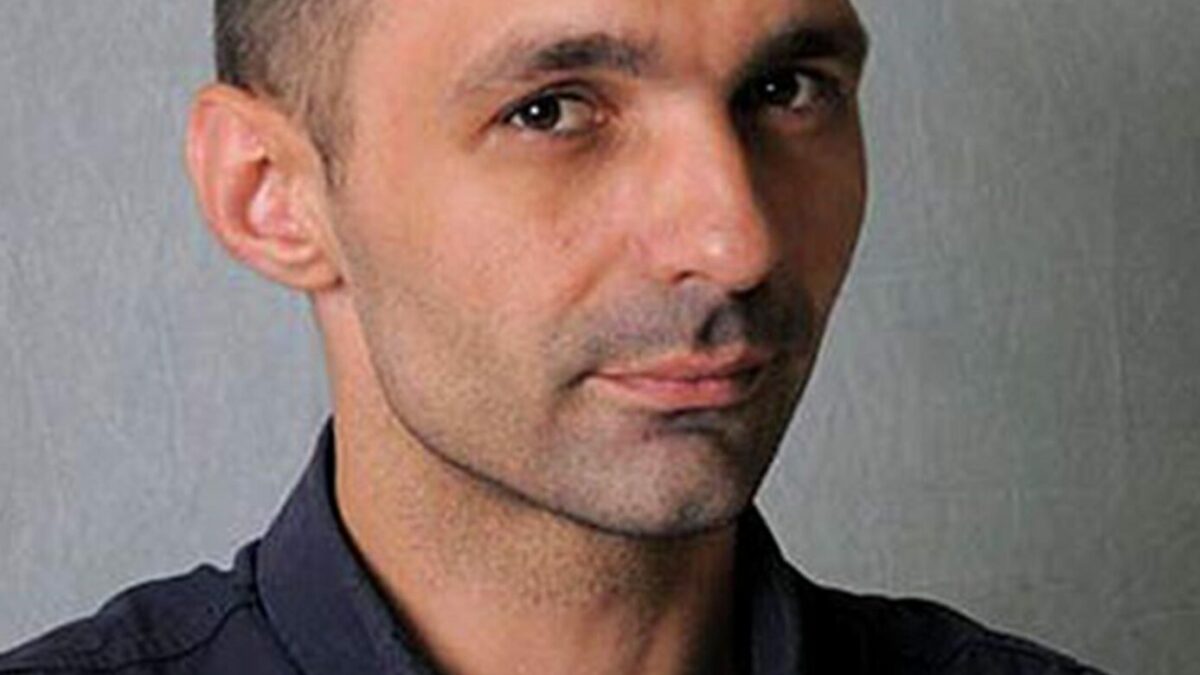
TUMM President Radomir Kračković said that 2025, much like the years before it, was a challenging one for Montenegrin journalists and media workers.
“We recorded a record number of attacks against journalists—33 in total. We also documented pressure on trade union organizations and their representatives in public media, as well as a growing trend of lawsuits against media reporting that can be characterized as SLAPP lawsuits, a trend that has continued into this year,” Kračković said.
He added that political pressure in various forms continues, as does the practice of politicians publicly criticizing the work of the media. Attempts to target media outlets because of their editorial policies have also become increasingly common.
“Another worrying trend is that attacks on journalists and media workers are no longer met with universal condemnation. Some political parties avoid condemning such attacks altogether, while others openly side with the perpetrators or express support for them after they are arrested,” Kračković said.
He stressed that the economic position of journalists remains one of the sector’s greatest challenges, as the overwhelming majority of media workers still earn less than the national average salary, despite salary increases in recent years.
“At the Trade Union of Media, we believe that by the end of this year we will finally succeed in signing a Sectoral Collective Agreement that will guarantee higher minimum wages in the media industry and introduce new rights for media workers. Encouragement comes from the two company-level collective agreements concluded over the past year, at Radio-Television Pljevlja and Radio-Television of Montenegro (RTCG). We hope that other media organizations will follow their example,” he said.
According to Kračković, one positive development is that cases involving attacks on journalists are now being processed more quickly than in the past, meaning that every attack recorded last year has reached at least some form of institutional outcome.
“Another positive step was the signing of the Protocol on the Protection of Journalists by the key state institutions, media representatives and the Trade Union of Media. This created the conditions for establishing a Working Group, or Mechanism for the Protection of Journalists, which automatically provides legal and psychological assistance to journalists who are attacked. In addition, the Trade Union of Media has introduced a free SOS hotline for reporting attacks on journalists, the first service of its kind in Montenegro,” Kračković said.
European Commission Non-Paper Confirms What TUMM Has Been Saying for Years
Referring to the European Commission’s non-paper, which was published in the media the previous day, Kračković said that the document fully corroborates TUMM’s long-standing findings regarding the state of the media sector in Montenegro.
According to him, the document draws on data collected by the Trade Union of Media and expresses concern over both the growing number of attacks against media professionals and their poor socio-economic position.
He added that the European Commission also identified shortcomings in social dialogue and collective bargaining, as well as pressures associated with trade union organizing.
“It is highly significant for the entire media community that the European Commission has recognized that improving the position of media workers depends not only on adopting better legislation, but also on ensuring better overall working conditions,” Kračković concluded.